
Investigative reporter Ryan J. Foley used sourcing, creativity and public records to unearth an exclusive story that stood out in the competitive and intensely covered U.S. immigration beat.
Stories of wrongful detention of U.S. citizens by U.S. immigration authorities have become common, but this one had a twist. Phillip James, a severely mentally ill man who believes he was born in Jamaica, had convinced U.S. immigration authorities of this, even though the man’s mother, a birth certificate and other public records said he is a U.S. citizen born in Florida. He claimed to be the illegitimate son of a former Jamaican prime minister and a descendant of a royal family in Lebanon, where he also claimed citizenship, despite a lack of evidence. As a result, James has been detained for nearly a year and could face deportation, with immigration officials taking his story as fact despite substantial proof to the contrary and the absence of evidence to support his claims.
Foley began digging into the case based on a tip and was able to flesh it out using public records, overcoming obstacles that included the unwillingness of the story’s subject to cooperate.
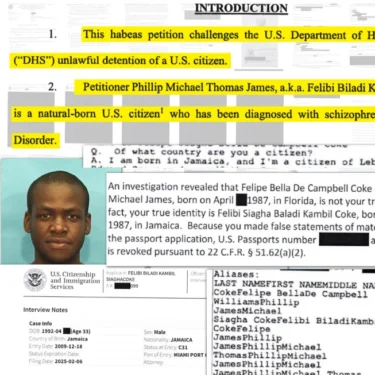
Visuals also proved challenging, as James and his family did not want to be photographed or filmed. Foley worked with visual artist Kevin Vineys on the AP graphics team to create a collage of documents and a government photo of James.
The judges were impressed by the use of extensive document and source work to shed light on a startling case that tells a broader story about the vulnerability of people with mental illness in an immigration system focused on boosting deportation numbers.
For exclusive reporting on a competitive beat, Foley is this week’s Best of the AP — Second Winner.

Related articles