
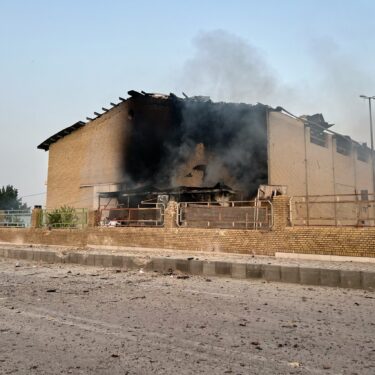
Jerusalem reporter Julia Frankel delivered a close look at the U.S. military’s ballistic missile of the future in its first suspected use in a conflict: the first day of the war with Iran.
Frankel worked with the conflict monitor Airwars to highlight Lockheed Martin’s Precision Strike Missile, which is designed to explode midair and fire 180,000 dense metal pellets at high speeds in all directions. Airwars was the first to map the radius of damage caused by a February strike, believed to be from this new weapon, in the Iranian city of Lamerd that killed at least 21 civilians, and provided Frankel with the findings in advance.
The story also showed how widespread its damage could be, after three missiles killed civilians roughly half a football field away from where they detonated and caused damage more than three times farther away.
The U.S. acknowledges it fired this weapon in Iran but denies it was used in this city. Evidence compiled by Frankel in close collaboration with colleagues in Washington appears to contradict this account. UGC Producer Beatrice Dupuy and Deputy Middle East News Director Yesica Fisch contributed important work on visual verification, and Jerusalem News Director Erin Cunningham and Top Stories Editor Brad Foss helped edit the package.
Judges were impressed by the strong exclusive that shed light on a new weapon with details unmatched by others. Images showing how far the pellets spread also offered an accessible and compelling way for audiences to understand the technology.
For showing the world just how damaging the U.S. military’s missile of the future could be, Frankel wins this week’s Best of the AP — First Winner.

Related articles