
Associated Press teams across continents delivered outstanding coverage of the hantavirus outbreak in all formats, deploying expert coordination, round-the-clock reporting, constant pursuit of new leads and innovative ways to report the story that was quickly reverberating around the world.
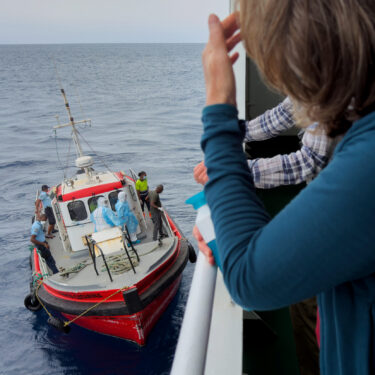
When the World Health Organization announced that a suspected outbreak of hantavirus on a cruise ship in the Atlantic Ocean had killed three people, Assistant News Director Gerald Imray and his team in South Africa sprang into action, chasing details about the deaths and a British man admitted in a South African hospital as one of the suspected cases. With the ship stranded as it waited for help off the coast of Cape Verde, West Africa senior producer Annie Risemberg and photographer Misper Apawu quickly deployed to the country within hours’ notice, battling logistical challenges to photograph and broadcast an unmatched 21 hours of live coverage of the ship from May 5 onwards till its departure. Risemberg, meanwhile, sourced user-generated content (UGC) of the ship – one of the first images that showed the world what the interior looked like – through a passenger on board whom she contacted via Instagram. Their edits, including edits of seaborne and airborne medical evacuations from Cape Verde were used thousands of times by broadcasters.
As global interest in the story surged, AP journalists across the international and U.S. desks quickly responded to developments, providing answers, clarity and facts for a complex story and unfolding story with many unanswered questions. Susan Montoya Bryan provided an excellent explainer on deadline while the Health & Science desk continued to provide needed context and expert insights to ensure factual reporting on the outbreak.
Buenos Aires-based reporter Isabel DeBre exclusively broke the news that Argentine Health Ministry authorities were focusing their investigation on Ushuaia as the likely origin for the outbreak. She also followed up with separates on the rise of hantavirus in Argentina that included an exclusive interview with the parents of a child who’d had hantavirus, and another on the government’s failure to quickly send investigators to the town where they believe the Dutch couple contracted the disease. Senior video producer Victor Caivano quickly contacted a stringer in Tierra del Fuego and AP was first to move video from Ushuaia. Additionally, Caivano garnered an exclusive interview with a family who lost a loved one to hantavirus in San Andres de Giles.
AP’s remarkable response continued, with a dynamic live blog, timelines, explainers and every development through the week. As the ship approached Tenerife, Spain, exclusive photos and videos provided by passengers again put AP head and shoulders above the competition. That unmatched content included photos aboard the boat, which featured on front pages and topped websites of major outlets around the globe. In addition, multiple exclusive UGC video edits provided a window into passengers’ harrowing experience upon arrival in Tenerife, from pulling into port, to disembarkation, and then arrival at the tarmac for evacuation.
The reporting from across teams and formats resulted in incredible high usage with both key clients and readers, including with timelines, explainers and graphics. The video coverage was comprehensive and fast, as were AP photos with exclusive images and UGC from AP photographers Emilio Morenatti, Manu Fernandez, Arturo Rodriguez, and Peter Dejong.
Judges were impressed with how AP dominated the space with comprehensive and sustained coverage, breaking news with innovative solutions that secured all-format content and global exclusives.
All staff involved in the coverage are honored as this week’s Best of AP — First Winner.
Submission Links
https://apnews.com/photo-gallery/hantavirus-cruise-spain-e72caa6ef4954f0a837cb0ad86719f13 https://apnews.com/photo-gallery/hantavirus-cruise-spain-7a7939de078ac29e4337349ea6624b7e https://apnews.com/video/a-cruise-ship-is-waiting-for-help-after-3-people-died-in-a-suspected-outbreak-of-the-rare-hantavirus-a73f0bb2e3d64a198b411f189a212724
Related articles