
Education accountability reporter Bianca Vázquez Toness and education data reporter Sharon Lurye set out to show who is benefiting from the boom in school choice scholarships and who is left behind. In theory, these programs are supposed to give children an educational opportunity they wouldn’t otherwise have. In reality, students already in private or home school are most likely to benefit, Lurye’s data analysis showed.
Lurye’s analysis resulted in a national scoop, incorporating an astounding amount of state-by-state data. She obtained data in some states that hadn’t been previously reported. And in states that released ZIP code-level data on school choice scholarships, she performed a first-of-its kind analysis using socioeconomic data from the U.S. Census to show that wealthier families were more likely to benefit than poor families. Vázquez Toness reported from Texas to find a family that illustrated the analysis’ findings as the state is launching a $1 billion school choice program this fall.
The project was illustrated with photos by chief photographer Julio Cortez and graphics by interactive artist Will Jarrett. The entire project, including the immersive graphics, was translated into Spanish.
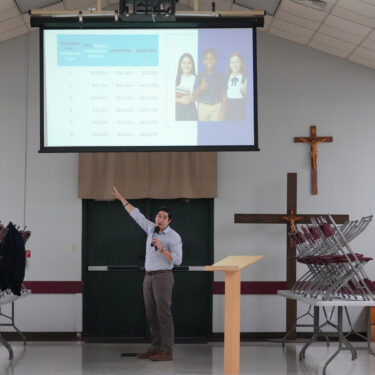
The primary impact came from a data workshop for local and nonprofit newsrooms hosted by Education collaborations editor Alia Wong, Vázquez Toness and Lurye. Attendees received training on how to use AP’s data analysis, how to find sources who will share their experiences with school choice and how to find school choice data in every state that has a program. The data and reporting tips were also shared with all AP and APFJ members via a Localize It guide.
The judges praised the impactful use of graphics to translate the data into easily understood visuals and the compelling character driven narrative.
For producing exclusive data, visuals and storytelling, Vázquez Toness, Lurye, Jarrett, Cortez and Wong win this week’s Best of AP – Second Winner.
Submission Links
https://apnews.com/projects/privatizing-public-school-us-es/
Related articles