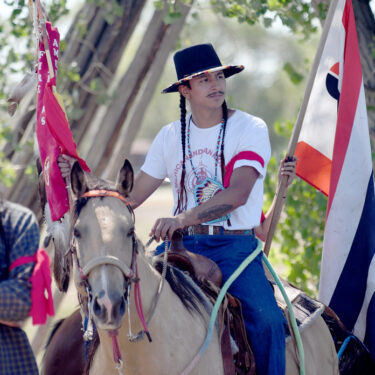
Indigenous Affairs reporter Savannah Peters got a tip from long-time sources in the Eastern Shoshone and Northern Arapaho communities about a controversy sparked by a Christian pastor’s condemnation of sacred Arapaho ceremonial ways, in a sermon delivered within their reservation boundaries. Both tribes said the pastor was no longer welcome among their people, but Savannah explained the catch: The pastor’s church sits on privately owned land, which meant the tribes lacked jurisdiction and thus couldn’t evict her.
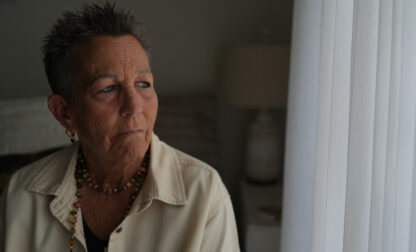
Pastor Sarah Lucas initially declined to talk to the AP. But over several phone calls, Savannah persuaded Lucas to do an on-the-record video interview. It was the first and, so far, only sit-down interview she has done. It took many off-the-record conversations and explanations of the reporting process to convince a few current and former church members to speak openly. Tribal members who never attended the church were also hesitant, but people who have known Peters for a long time vouched for her.
Peters’ deep understanding of tribal ceremonial ways enabled her to explain the tensions clearly to audiences without airing elements not meant to be discussed publicly. Video journalist Thomas Peipert secured video and shot photos for the story. His vision for presenting a complicated topic in an accessible way helped make it a huge success, with producer Sahar Akbarzai championing a social video. The story was a hit: No other outlet matched Peters’ nuanced reporting in explaining how the tribes ended up sharing a reservation and why they lack complete jurisdiction within it. The video remained in the Top 10 most watched on YouTube and AP News for more than a week after publication and led all of AP News on the day it was published.
Judges praised how the imaginative storytelling elevated the news and drew huge engagement from audiences.
For distinctive and resonant storytelling, Peters and Peipert win this week’s Best of the AP — Second Winner.

Related articles