
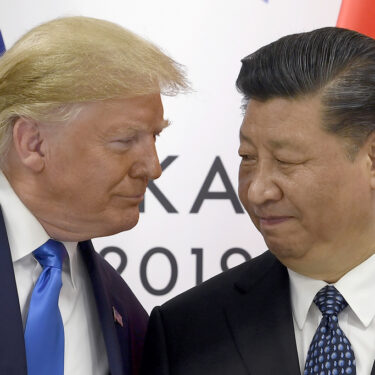
In the hours before President Donald Trump met Chinese leader Xi Jinping in South Korea, the Associated Press published an exclusive investigation revealing how Washington had repeatedly allowed—and at times actively helped—U.S. companies sell sensitive technology to Chinese police.
The scoop, timed to coincide with expected U.S.-China talks on tech exports, peeled back the layers of official rhetoric to show a stark contradiction: While the U.S. government has warned of the national security threats and human rights abuses tied to China’s surveillance state, it has also supported the very exports fueling it.
Through months of painstaking reporting, investigative journalists Garance Burke, Dake Kang and Byron Tau uncovered that across five Republican and Democratic administrations, U.S. officials quietly encouraged and directly assisted companies seeking to export advanced technologies—including some with facial recognition and data analysis capabilities—to Chinese public security agencies.
The report uncovered procurement records, export filings and government communications that demonstrated how longstanding economic policy and political influence enabled the trade. The investigation raised urgent questions about how the U.S. defines its responsibility in the global surveillance ecosystem, especially as tensions with China continue to mount.
Judges praised the team’s dogged reporting, the timeliness of the release and the story’s global implications.

Related articles