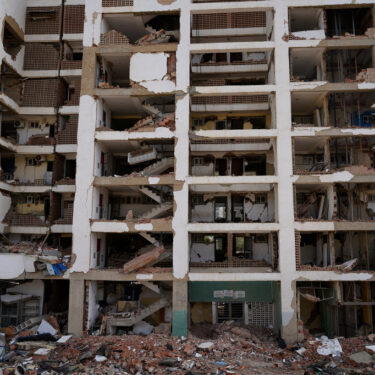
Three months after devastating earthquakes rocked Venezuela, killing more than 6,500 people and leaving more than 17,000 people homeless, the government has failed to address why so many buildings collapsed and so many people died. In the weeks since June 24, AP reporters have led ongoing investigative efforts into why Venezuela’s twin quakes were so deadly. Caracas-based reporter Regina Garcia Cano teamed up with investigative reporter Garance Burke to tell AP’s widest-ranging accountability story on the quakes since, using exclusive data to show that the destruction in Venezuela’s La Guaira coastal communities was not simply the result of a natural disaster.
Cano and Burke’s reporting revealed how government officials moved forward with housing construction along the coast despite warnings from scientists and engineers about the area’s seismic risks, ultimately putting thousands of residents in harm’s way.
The story broke new ground with exclusive data that helped explain the high death toll from the quakes. Because there were no local instruments measuring the intensity of the shaking, a team of Stanford researchers analyzed security-camera footage from Caraballeda, the most affected community in La Guaira, frame by frame. Their analysis provided the only quantitative information about the ground motion near the rupture and revealed some of the largest ground movement ever documented. AP’s reporting connected those findings to the poor soil from repeated destructive natural disasters, vulnerable building designs and questionable construction practices that magnified the devastation.
The result was a deeply reported reconstruction of decisions made years before the earthquakes, tracing how political urgency, inadequate planning and ignored warnings contributed to a disaster that claimed thousands of lives. The reporting also raised urgent questions about whether the Venezuelan government will repeat those mistakes as it begins rebuilding.
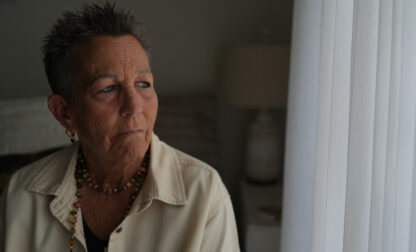
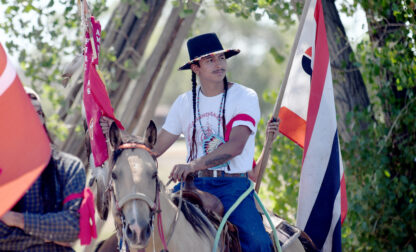
The story was strengthened by exceptional visual journalism. Photojournalist Matias Delacroix’s images captured the human cost of the collapses, while video journalist Juan Pablo Arraez’s videos showed the dramatic scale of devastation. Photojournalist Dario Lopez expertly produced the digital rollout of the piece. The combination of investigative reporting, exclusive scientific analysis, photography and video made the findings both authoritative and visually arresting.
For their persistent, deep investigative reporting and accountability journalism, Regina Garcia Cano and Garance Burke win this week’s Best of the AP — Second Winner.

Related articles